

2026 Top Pulse Ox Monitor Types Which One Is Best?
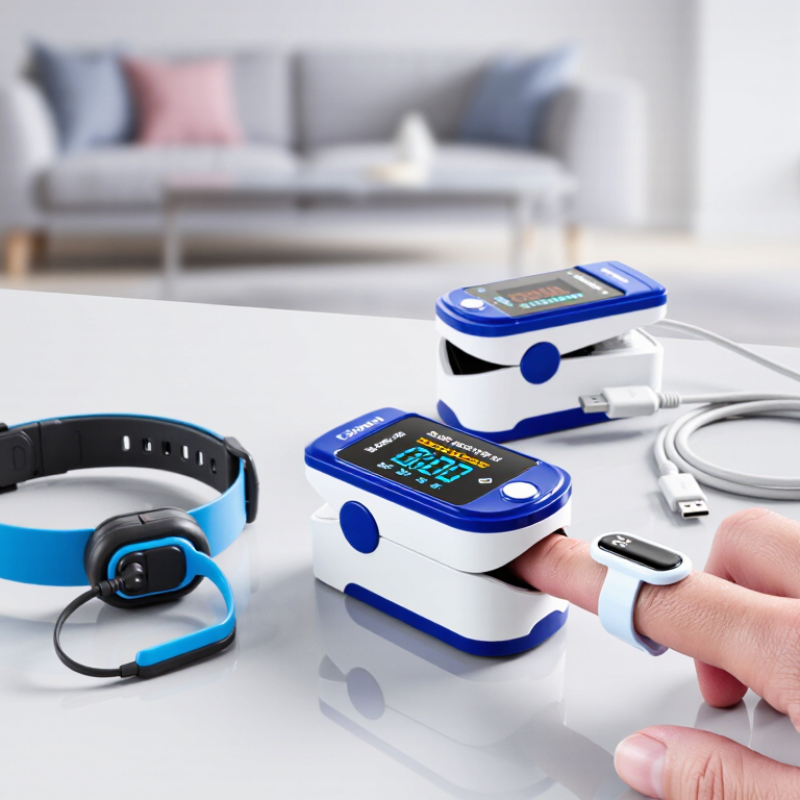
Choosing the right Pulse Ox Monitor in 2026 is less simple than comparing one number on a product page. A fingertip model may suit quick home checks, while a wearable device supports longer trend tracking. Handheld units often provide stronger controls for clinical or professional settings. Each type serves a different purpose.
In real use, small details can change the reading. Cold fingers, motion, bright light, nail polish, and poor circulation may affect accuracy. A device that works well during a quiet evening may struggle during exercise or restless sleep. Look for clear instructions, a readable display, durable construction, and independent performance testing. Regulatory clearance may also differ between countries, so buyers should verify local requirements.
The best Pulse Ox Monitor is not automatically the most expensive model. It should match the user, setting, and reason for monitoring. A caregiver may value a simple alarm and large numbers. An athlete may prefer lightweight trend data. A clinician may need reusable sensors and dependable documentation. No consumer monitor is perfect. That deserves honest attention. These devices estimate oxygen saturation and pulse rate; they do not replace professional assessment. Seek medical advice when readings remain unusual or symptoms appear, especially with breathing difficulty, chest discomfort, confusion, or bluish skin. This guide compares major monitor types through practical experience, technical evidence, and trustworthy guidance. It also questions common marketing claims, because convenience is not the same as clinical reliability.
Pulse Oximetry Basics: SpO₂, Pulse Rate, and FDA Accuracy Standards
2026 Top Pulse Ox Monitor Types: Which One Is Best?
Pulse oximetry estimates blood oxygen saturation, shown as SpO₂, and measures pulse rate. SpO₂ reflects the percentage of oxygen-carrying hemoglobin in your blood. Pulse rate shows how fast your heart beats per minute. These numbers are useful, but they are not a diagnosis. Numbers need context.
A dependable monitor should provide clear readings, stable sensing, and instructions for proper use. In the United States, FDA-cleared devices are reviewed against applicable performance expectations. However, FDA clearance does not mean every reading is perfect. Motion, cold fingers, poor circulation, nail products, and skin pigmentation can affect results. A warm, still finger usually supports better measurement.
Accuracy matters more than a bright screen or extra features. Check the reading after resting for several seconds, then compare it with symptoms and repeated measurements. A sudden result may deserve another check. Still, repeated abnormal readings should not be dismissed, especially with breathing difficulty, chest discomfort, confusion, or unusual weakness. Seek qualified medical advice promptly. The uncomfortable truth is simple: home monitors can guide attention, but they cannot replace clinical evaluation. Choosing the “best” type also depends on the user, since a fingertip model, wearable device, or clinical monitor may perform differently in real conditions.
| Monitor Type | Measurement Method | Typical Display | Best Use | Typical Strengths | Important Limitations | FDA / Accuracy Considerations | Overall Suitability |
|---|---|---|---|---|---|---|---|
| Fingertip Pulse Oximeter | Optical transmission measurement through a finger, usually using red and infrared light. | SpO₂ percentage, pulse rate in beats per minute, and often a pulse-strength indicator or waveform. | Short spot checks at home, during travel, or during routine monitoring. | Compact, low power consumption, simple operation, and usually the fastest option for a single reading. | Readings can be affected by cold fingers, movement, poor circulation, nail coverings, skin pigmentation, low signal strength, or incorrect placement. | Choose a device with clear regulatory authorization for the intended market and published accuracy data. Accuracy should be evaluated across the labeled SpO₂ range, not only at normal oxygen levels. | Best for: general spot checks and portability. |
| Handheld Pulse Oximeter | A separate display unit connected to a reusable or disposable probe placed on a finger, toe, or ear. | SpO₂, pulse rate, pulse waveform, signal quality, and sometimes perfusion-related indicators. | Clinical assessments, home care requiring a larger display, and patients needing alternative probe sites. | More probe options, better viewing distance, longer cables, and greater flexibility than most fingertip units. | Less convenient to carry; cable position and probe placement can influence the signal. | Professional-use labeling should state the tested accuracy range and conditions. A cleared device is not automatically accurate under every motion, perfusion, or environmental condition. | Best for: flexible and repeatable measurements. |
| Bedside or Stand-Alone Monitor | Continuous optical measurement using a connected sensor, often with configurable alarms and trend storage. | SpO₂, pulse rate, waveform, alarm status, signal quality, and historical trends. | Hospitals, clinics, monitored recovery areas, and situations requiring continuous observation. | Large screen, audible and visual alarms, continuous trending, multiple sensor choices, and stronger workflow integration. | More expensive, less portable, and dependent on correct alarm settings, sensor placement, and clinical supervision. | Clinical monitors are generally assessed under applicable medical-device performance requirements. Confirm the labeled accuracy, alarm specifications, sensor compatibility, and intended patient population. | Best for: continuous supervised monitoring. |
| Wearable Ring or Wrist Sensor | Reflectance-based optical sensing from the skin surface, commonly at the finger or wrist. | SpO₂ trends, pulse rate, activity data, and sometimes sleep-related measurements. | Longer-term trend observation when the device is specifically authorized for oxygen measurement. | Comfortable for extended wear, automatic data collection, and useful trend visualization. | Fit, motion, skin contact, sleep position, low circulation, battery level, and software processing can affect readings. Some products estimate trends rather than provide medical-grade spot measurements. | Do not treat a general wellness wearable as a diagnostic pulse oximeter unless its regulatory status and labeling specifically support that use. Trend data may not be interchangeable with a clinical reading. | Best for: trends, not emergency confirmation. |
| Fetal or Neonatal Pulse Oximeter | Specialized optical sensor and algorithms designed for neonatal or other narrowly defined clinical applications. | SpO₂, pulse rate, waveform, alarms, and patient-specific trends. | Specialist care environments with trained personnel and an appropriately sized sensor. | Designed for small patients, specialized probes, and clinical monitoring requirements. | Not interchangeable with standard adult fingertip devices. Probe size, placement, motion, low perfusion, and patient physiology are critical. | Use only within the population, sensor type, and clinical conditions specified in the device labeling. Pediatric and neonatal accuracy claims may use different tested ranges and conditions. | Best for: specialized clinical applications. |
| Smartphone Camera or App-Based Tool | Camera and light-based image analysis, sometimes combined with software estimation rather than a dedicated medical sensor. | May show an estimated SpO₂ value, pulse rate, or wellness trend. | General wellness information only, unless the complete system is specifically authorized for medical measurement. | Convenient, widely accessible, and does not require a separate physical monitor. | Results may vary substantially with lighting, camera hardware, finger position, motion, software version, and skin contact. Some tools do not measure SpO₂ directly. | Regulatory status applies to the specific app-device combination and intended use. A general health app should not be assumed to meet medical-device accuracy requirements. | Best for: non-diagnostic wellness use. |
Related Posts
-
How to Choose the Best Oximeter for Your Business?
-
How to Choose the Best Pulse Oximeter for Your Needs?
-
Global Innovations in Pulse Ox Machines: What to Expect by 2025
-
Why You Should Monitor Your Health with an Oxygen Pulse Oximeter
-
Top China Suppliers of Accurate Pulse Oximeters for Buyers?
-
Top 10 Pulse Oximeter Manufacturers from China at the 137th Canton Fair